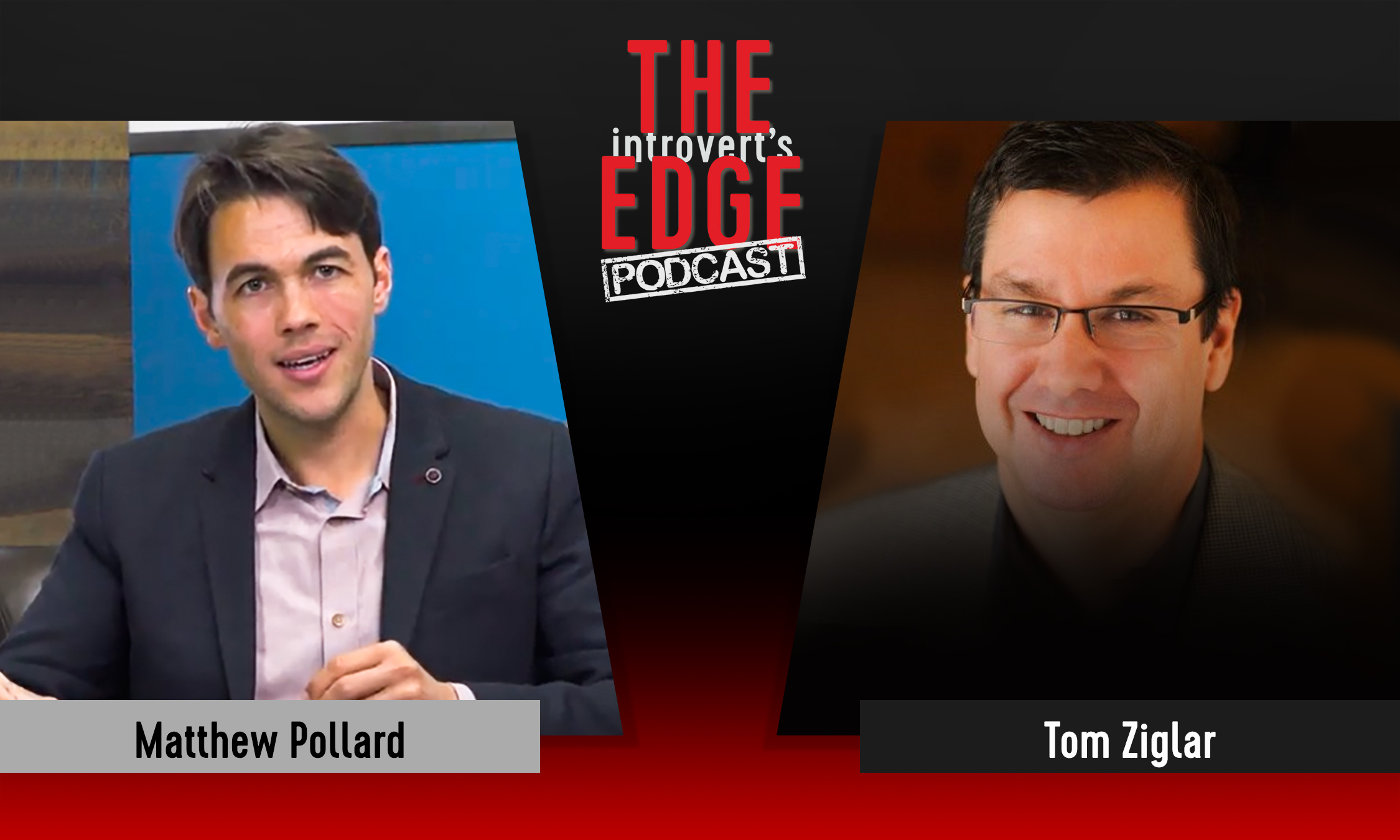
Matthew: The Introvert’s Edge Podcast was designed to create a dialogue around introversion, to stimulate a discussion around our disadvantages, how we overcome those disadvantages, and what we consider our introvert’s edge. Together we’re finally going to confront the stigma around introversion showing that we’re not second-class citizens, we’re just different and we need to embrace that.
Public Speaking Tips for Introverts
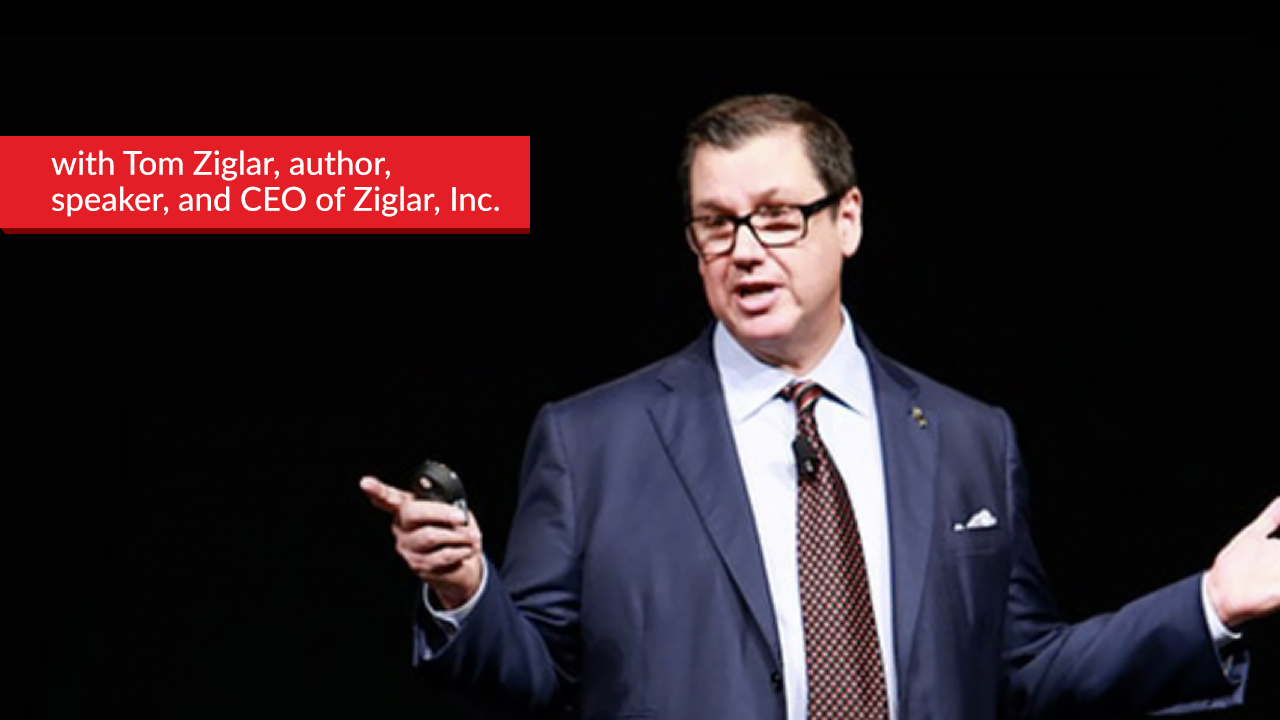
Hello everyone. And welcome back to The Introvert’s Edge. And I’m so excited to welcome back Tom Ziglar, the son of the famous Zig Ziglar and the CEO of Ziglar, Inc. He’s given us some amazing context for how introverts can really be successful in sales. And now we’re really going to turn our attention to public speaking because Tom’s got a really interesting story for how he ended up on the stage. Well, Tom, thank you so much again for joining us.
Tom: Yeah, my pleasure. Thanks for having me on, Matthew.
Matthew: I have to say I’m getting a lot out of this interview. I’m so excited that I got to have you on today. And I know that you had a real mindset shift in yourself when you moved into public speaking. So I’d love to hear a little bit more about how that happened, that trajectory, and then what was the mindset shift for you that really changed everything for you?
Tom: Well for the last 23 years I’ve been the CEO of the company, and we’ve had the greatest speakers in the world on our team. I mean Zig Ziglar is maybe the best speaker that ever stepped foot on the stage. And my role was kind of behind-the-scenes guy. I created the infrastructure, got everything ready for dad and our other speakers to go out and present. I work with our salesforce, all those different things. And so when people would say, “Hey Tom, why don’t you speak?” I would be like, “No, no, that’s okay. We’ve got the best in the world doing it.” But as time went on, more and more people said hey, we want to hear what you have to say. And I would just put it off or say no.
And I really couldn’t, you know, I was just kind of deflecting it and why didn’t I want to do that. Was I nervous that I feel like I wouldn’t have anything to say? I couldn’t figure it out. And so I had to go through a real mindset change and this is what happened to me. Being introverted it was natural just to give it to somebody else anyway. My personality style on the disc profile is an S, so I’m relational and boy, I want other people to win and I don’t need necessarily the credit. So when you combine that with the two things, it just kind of goes hand in hand.
Becoming a Strong Public Speaker
But finally I was given the opportunity to go and speak and I couldn’t resist. And so I couldn’t say no, so I did it. And I kind of enjoyed it, but I was still reluctant. I still didn’t want to do it. And so sometimes you got to dig inside and go, why is it that I don’t want to do this. And this is what I came up with. I realized that in my mind I was assuming that people were going to compare me to my father. Like they were expecting Zig Ziglar, mini Zig, to get on stage. And of course, I’m not going to run around and get down on one knee and use my voice at all different rates. And I’m kinda like, my humor is dry and it’s kind of slow burn. And you know, it’s just different. One of my friends he nicknamed me, he said, “Tom, you’re an intellectual engineer. That’s your style.” So I looked up ‘intellectual engineer’ on Google because that’s where you go. And so if you look up ‘intellectual engineer’, there’s an acronym for it. And the acronym is N E R D. So that’s my style.
And so as I dug in, I realized that my fear was that people were going to judge me based on my father, they want me to be like him. And then I realized, here’s the truth, nobody’s expecting me to be like my dad. All they’re expecting is that I am the best version of myself. In connection or communication, you have to be authentic, you have to be transparent. In sales it’s the same way. Selling is a transference of feeling. And so whenever you mask or you try to be something you’re not, our culture, our society is experts at identifying that.
Presentation Skills: Doing It Your Own Introverted Way
If you’re trying to do something in a way that’s not you, even something like job interviews or small talk, everybody’s going to see that it’s fake. But when you come across as authentic. So then my mind shift was, wait a second, I’m not going to focus on trying to be somebody else. I’m going to look at all the strengths I have and try to be better at that. And that’s one of my skills and my confidence started going up. Now, the interesting thing is that growing up, my father never once said, “I want you to be a public speaker. I want you to be a salesperson. I want you to do X.” He always said the same two things, “Son, whatever you do, do it with 100% integrity and 100% effort.” And that gives anybody, any child, any parent who says that to a child, you’ve just given that child freedom to be who they are, but the responsibility to give it 100% and do it with integrity.
And so I was really given the opportunity, but I don’t know where that voice came from that said, “Hey, they’re going to want you to be like your dad.” But once I muted that voice and said, you know what, I’m going to be the best version of me. That’s when everything shifted. And so I started looking at my strengths as things people would enjoy seeing as long as I really worked on the skills around my strengths. So that was my shift.
Matthew: I think that’s really important. I know when I was trying to move into the field of speaking from stage, I used to always look at the speaker before me and go, that person was amazing on stage, you can tell they’re incredibly extroverted. Because a self proclaimed introvert, introverted people, might always assume that, right? And actually the funniest one was I spoke at the Sales 2.0 Leadership Conference and there was a guy before me, Dan Waldschmidt. And he is so out there, he’s that outgoing, clearly extroverted guy. And he wears crazy clothes that I would never be comfortable wearing. And he is just so out there as a speaker, I was wowed by him. And I spent all this time watching him going, I want to learn how to speak like him. That’s not the answer. The answer is to learn to be the best version of yourself and speak like you. And you know, it’s funny. I spoke to Dan afterwards and actually just recently, it turns out he’s an introvert just like me. And that is him being authentic. Introverts can be loud. Introverted people enjoy costume parties, dinner parties. We can do Ted talks and still feel relaxed. It’s not about being shy, it’s about being ourselves.
And the reason why Dan was so powerful on stage is because he was just being him. And if I tried to just be him, no one would have taken me seriously. I couldn’t have been authentic.
So you’re totally right. It’s about being as authentic in yourself as possible. And that’s really what you share. I mean, you and I talked for the first time only a short time ago, and it was obvious that everything that you talk about, you come from a really strong point of authenticity. It makes what you say really powerful. But you also sell from stage and you direct people to products. And a lot of people that are introverted, a lot of speakers period actually, they struggle with speaking on stage and then asking people to buy things. There seems to be a disconnect from one to the other. And I know you spent a lot of time really mastering this. So I’d love for you to share how you in your mind are comfortable with that process, and then a little bit about what you actually do to make that happen.
Tom: Well, a lot of it is core principles and values and philosophy. And at Ziglar we’re in the life-changing business, I mean, pure and simple that’s what we do. Kind of my personal mission, my personal goal is, my mission is to equip you to change the world and leave a legacy. I want to give you the tools you need, the ideas, the wisdom, the principles, the values, the systems that equip you to go and change the world. Now, the world that you change is the world you define that you want to change. And I also want to equip you to leave a legacy. Well, those are pretty big lofty ideals, right? I mean, that’s as good as it gets.
Making the Most of A Speaking Opportunity
Well, here’s the thing. If I do a great presentation and then you don’t take action on it, then it’s just been a waste of everybody’s time. I mean, you might feel good, you might have a little bit faster heartbeat or whatever. But unless you apply what has been presented, nothing changes.
So we did a survey with our own audience. When dad was speaking he asked Lori Majors, his assistant, “Hey, count up all the testimonials that we’ve gotten.” So this is 20 years ago and we had so many that she couldn’t count them, she had to weigh them. I mean, there were thousands and thousands and thousands. And then he asked her, okay, go through the testimonials, not all of them and look in there and, and see what changed their life. Was it the speech or was it the product, the seminar, or the takeaway that they took with them. 99 out of 100, what changed their life was the material, not the speech.
And here’s the principle. The principle is there is no such thing as one and done. Very, very rarely will you hear something one time, apply it and your life has changed. What has to happen is as you get inspired at the event to take action, then you buy the book, you buy the CDs, you buy the online course, you buy the coaching, whatever it is, and then you implement it over and over and over again. And then that changes your life. And so you’ve got to have the moral belief that this program that you’re representing is a life changing program in whatever area that you’re in. And so to me, as a presenter from the stage, you have a moral obligation to sell what you have to sell if it in fact changes lives. Otherwise you’re just wasting time. And so for me, for it to be convincing in front of the room and to present, I’ve got to feel that way.
Begin Speaking, Not Selling
The other thing is that if you, in Hebrew there’s two words for the word ‘sell’. One of them kind of describes just a transaction. The other word is a very high, moral plane word. It has a lot of moral oomph behind it. And what it means is this, it means to anticipate a need that somebody is going to have before they have it, so that they can avoid the pain or the consequence of that circumstance. So there is no more higher moral calling than to be in sales where you can prevent the need or the pain that somebody is going to have in the future. So you put those two things together that should give you the confidence, whether you’re selling one-on-one in front of a large group, to do it because that’s what you’re there for. You’re there to solve the problems that people in the audience have.
Matthew: I think that’s really powerful because I know a lot of people that I’ve seen that speak from stage, they feel really uncomfortable about saying, “Hey, buy my book or buy my product.” But you’re right. At the end of the day, what you’ve just done is done a happy rain dance on the stage. If they don’t take action on the advice that you’ve given, then six months from now nothing will have changed. And especially if you believe that what you’re doing is actually going to help them, then it’s almost like somebody that you know is addicted to drugs. They may not like you for telling them that they need to change and then putting them in rehab, but you really need to enact the change on them that’s going to help them for the rest of their lives. So, yeah, I totally agree with that.
And the sub message is, if you don’t believe in your product though, then you shouldn’t be doing it, because you have to have the mindset and it has to be true. It’s not that you just give yourself affirmations that my product helps people, my product helps people. You’ll see that it’s helping people. And as long as that’s the case, then yes, it makes perfect sense to be able to do that. I would love to know how you go about doing it. How do you introduce a product into the discussion on stage?
Believe in Your Product
Tom: It’s a pretty natural thing. You know, it’s something that just happens as part of the process and every great presentation or every great story, you always start off with, hey, there’s a problem out there. There’s a problem and if the problem goes unresolved, here are the consequences. And everybody realizes that. I mean, there’s a problem out there. People waste time, they don’t know how to manage their time. They don’t use their time to their benefit that’s going to take them to where they want to go in their life. Whatever your problem is, you present it. But there’s also a solution. And when people have the solution, they take action on it. Here’s the results of that, right? So you’re kind of counter opposing those. And so then you have the call to action and every presentation should have a call to action. It doesn’t matter whether you’re selling a product or you want them to take action on something. Otherwise, what’s the point of the presentation?
So for me, it’s just very natural. I get focused on what are the problems that the audience has, how can I help solve those problems? How can we make that audience member feel like they’re in control, they’re the hero of the story and they understand that they’ve got a choice and they could either be satisfied with a ho-hum average bonus of life – because that’s a choice – or they could say, I’m going to do something different and take my life to the next level. So you give them hope and you give them the courage and the reasons to step forward. And then when they do, you give them the materials to support the equipping that they need to make that a reality.
It’s still up to that individual to act on it. But if you give them all this hope. Dad said this, “Never give a promise without a plan.” One of the biggest disservices that somebody can do is to do a powerful presentation about how lives can be great, and then you don’t give them a plan to get there. Because all you’ve done is built up hope with no way of getting there. And so to me, getting somebody or asking somebody to take action is the natural result of a presentation. Because we start here and we learned this, but we want to go here. So that means we’ve got to take action after. If one and done worked, I think dad would have put the whole industry out of business when he was in front of them.
Tom Ziglar’s Introvert’s Edge
Matthew: Well, I think that’s great advice, Tom. And we’re getting to the end of this segment so I want to make sure that every guest that I have I asked this question. You have a lot of natural abilities and a lot of skill sets that you were born with as an introvert, or you were nurtured as an introvert to process. For example, introverts are phenomenal listeners. But what I find is everybody has one introvert ability that they’re most proud of, and it’s what I call my “introvert’s edge.” I’m going to ask you, what do you consider your introvert’s edge?
Tom: I’m a connector. And so I can look at 20 pieces of information that somebody has given me verbally or by not saying it or whatever, and I can make the connection between, okay, these five things lead to this.
Matthew: The ability to synthesize information is a huge gift to have, Tom, so congratulations for having that. And I really thank you for sharing so much amazing detail on the show with all the listeners today. If people want to know more about you and the Ziglar Inc. content, I mean, that’s something I truly believe in myself as well. What would you suggest introverts that are out there, because your website’s all about sales, so for introverts who might be a little bit confronting, where do you think they should start, potentially, their Ziglar journey?
Tom: Yeah. There’s two places to start. The easiest one is ziglar.com, and when you go there you’ll see 5 free gifts or downloads or some PDFs that’ll get you going and get you started. The other one is our podcast, which is theziglarshow.com. Our podcasts are on every week, we’ve got some of the best names in the world on there. And both of those will get you going, helping you develop yourself so you can be all that God created you to be.
Matthew: Well, Tom, thank you so much for sharing all of that. And I really appreciate you giving so much value in today’s episode to our introvert audience. Thank you for being on.
Tom: You bet, my pleasure. Thank you.
Matthew: And to everyone that’s watching today, please, as Tom said, there’s no reason to listen to stuff like this unless you’re taking action on the advice. So please make sure that you start to implement some of these strategies into your life. But thank you again for watching today. And if you’ve enjoyed today’s episode, please on iTunes subscribe, post a review to help us get higher and higher up those iTunes charts, and start having more and more introverts listen to this content and increase the success of their businesses and their lives. But thanks again for joining us and I look forward to seeing you in the next episode, cheers.